
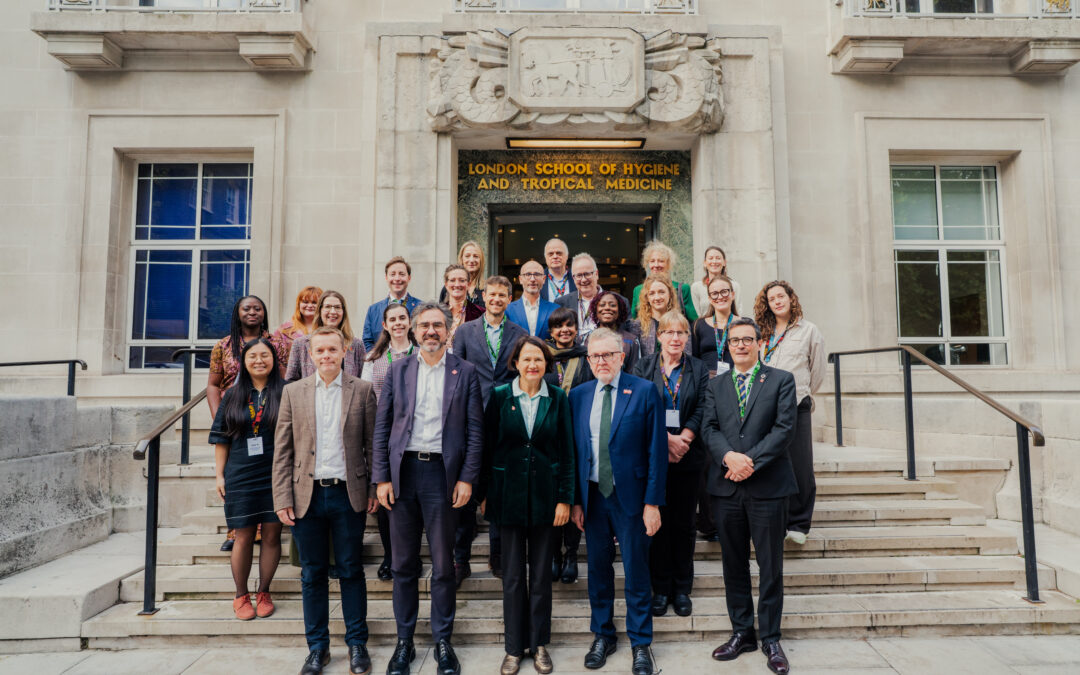
Members of the APPG on Nutrition for Development and the APPG on Malaria and Neglected Tropical Diseases recently visited the London School of Hygiene & Tropical Medicine (LSHTM), the home of the Agriculture, Nutrition and Health Academy (ANH) Science-Policy Platform. The delegation comprised Rt Hon David Mundell MP, Co-Chair of the APPG on Nutrition for Development, Catherine West MP, Co-Chair of the APPG on Malaria and Neglected Tropical Diseases, Alan Gemmell MP, Steve Race MP, Baroness Northover, and Lord Oates.
The visit was part of the APPG’s partnership with universities at the heart of global science-policy on food and nutrition, following previous visits to the John Innes Centre, Rothamsted Research, the University of Exeter, the University of Sheffield, and the University of Reading. It followed a parliamentary delegation to Tanzania last June where Rt Hon David Mundell MP, Steve Race MP, Monica Harding MP, and Lord Oates participated in the ANH Academy Week Conference in Dar es Salaam alongside LSHTM and global researchers, practitioners, and policymakers working at the intersection of agriculture, food systems, nutrition and health.
Malnutrition is preventable and treatable yet remains one of the leading causes of death in children under five globally. Investments in healthy, equitable, and resilient food systems deliver multiple co-benefits for people and the environment, abroad and at home – including by reducing malnutrition and diet-related disease burdens that affect global stability. LSHTM is at the heart of this work with a long history of nutrition research and science, alongside building and sustaining equitable partnerships with academics, policy makers, and practitioners across the globe.
The ANH Academy was founded in 2015, initially as part of the Innovative Methods and Metrics for Agriculture and Nutrition Actions (IMMANA) programme, which was funded by the Department for International Development (DFID). Led by LSHTM, the ANH Academy develops methods, metrics, and tools to better link agricultural food systems, nutrition, and health. It connects over 14,000 members in more than 160 countries, supporting global learning and evidence-sharing towards equitable and just food systems for nutrition and health. Its work shows how UK development funding can build lasting institutional capacity, make sustainable improvements to global nutrition, and support long-term policy changes that go far beyond one-off projects.
Following an introduction from Professor Liam Smeeth, Director of LSHTM, the visit began with an insightful presentation by Professor Suneetha Kadilya, Head of the Department of Population Health and Professor of Global Nutrition at the school. Professor Kadilya explained the UK roots of the ANH and its journey to becoming a flagship example of British science driving global health impacts alongside the school’s work on nutrition.
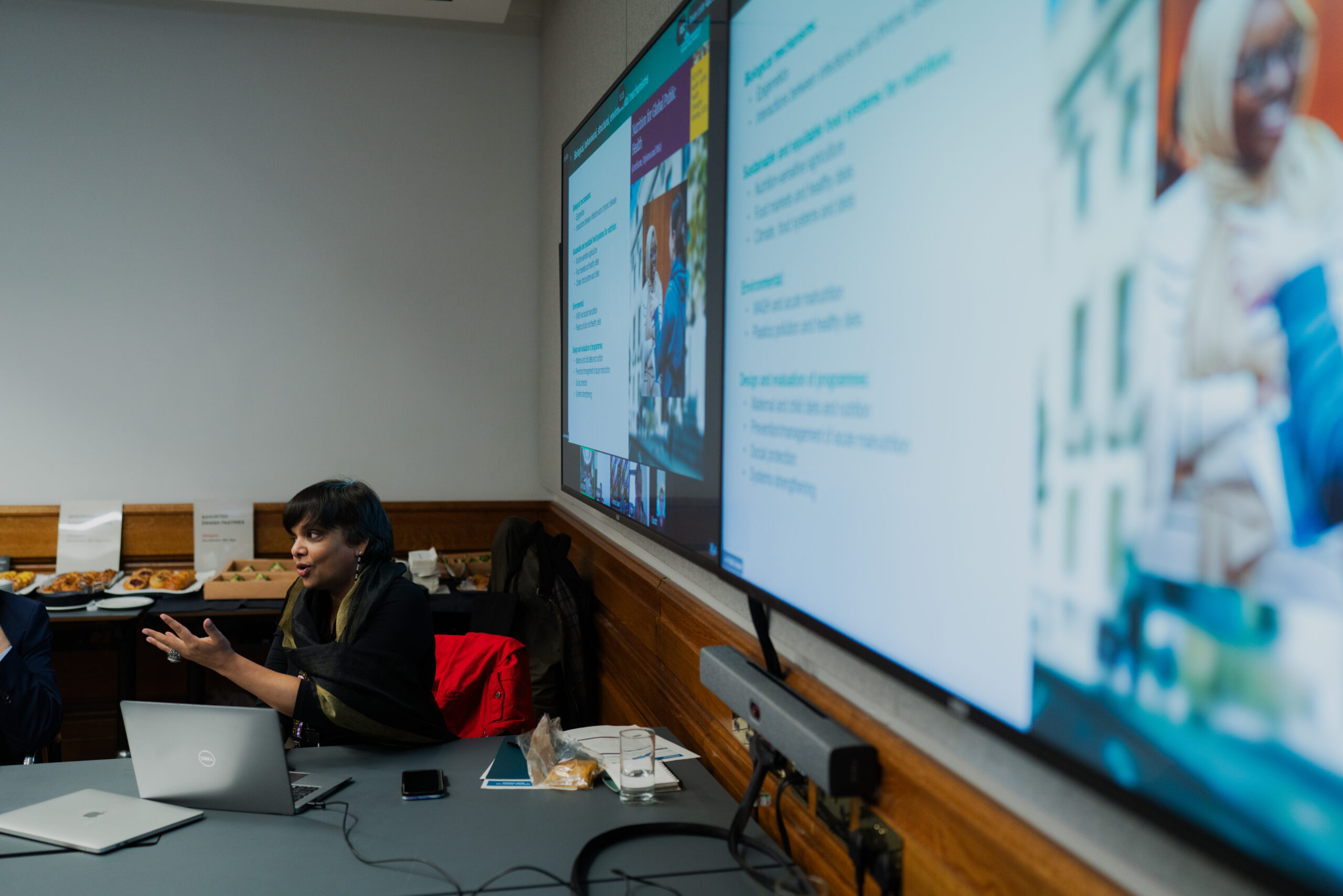
Photo credit: Robin Niedojadlo
Passing over to her colleague, Joe Yates – Director of Networks, Partnerships & Impact at the ANH – then outlined five case studies to illustrate the academy’s work, including establishing a new metric to understand how people can or cannot afford healthy diets across Africa. This tool was used to double the minimum wage in Nigeria to enable people to afford healthy diets. Joe also highlighted the link between gender and unstable food systems; over 60% of women’s employment in sub-Saharan Africa and Asia is in agriculture, with women often facing inequalities in wages and poor working conditions. Since 2016, the ANH Academy has developed innovative ways to measure women’s empowerment and its contribution to nutrition and health. At their annual conference in 2017, the ANH acted as the catalytic force in the development of a new policy in Pakistan which afforded new protections to women for the first time to support female agriculture workers
The academy’s newest initiative – the African-Regional Collaborative for Agriculture, Nutrition & Health (ANH-ARC) – is led by the University of Ghana, Stellenbosch University in South Africa, and the Policy Studies Institute in Ethiopia. Its goal is to provide African governments with evidence to design food and nutrition policies that are healthier, equitable, and resilient to climate change. During the visit, parliamentarians heard directly from Professor Amos Laar (University of Ghana), the Director of the ANH-ARC, alongside co-directors Alebel Bayrau Weldesilassie (Policy Studies Institute), Professor Scott Drimie (Stellenbosch University), and Tseday Mekasha (Policy Studies Institute) about their work to strengthen African-led scientific capability and equitable global partnerships. Professor Laar introduced the struggles with policy poverty, outlining that a lack of coordinated translation is leading to limited policy uptake. As Professor Lar highlighted, knowledge on nutrition is growing, but evidence-to-action failures risk translating that knowledge into policy, investment, and implementation at scale. This makes the ANH-ARC’s work in closing the gap between knowledge and policy enactment crucial.
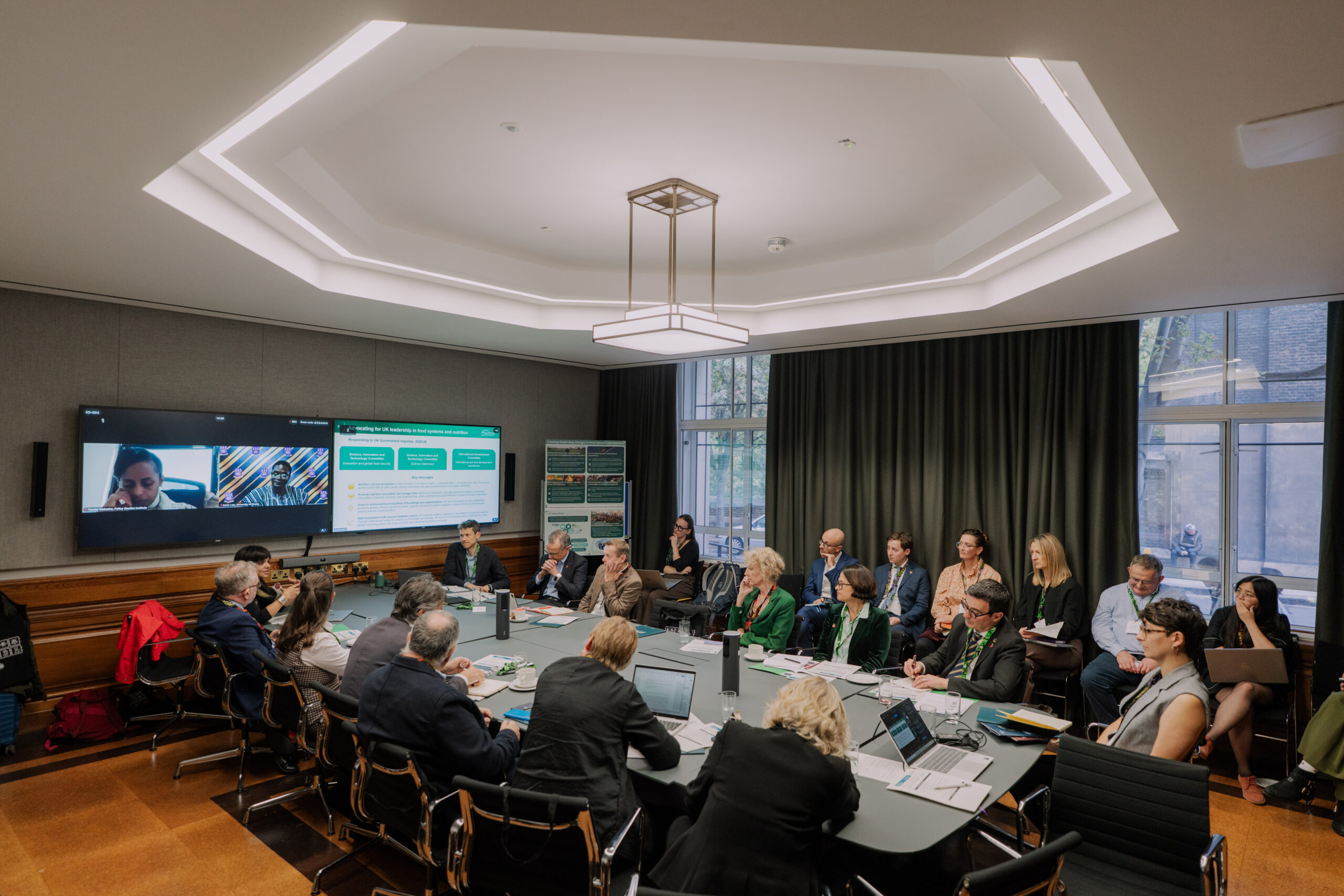
Photo credit: Robin Niedojadlo
Joe ended the presentation by highlighting ANH’s partnership with UAMH and the APPG. As a result of the support from UAMH and the APPG, the ANH and LSHTM have responded to three UK Government inquiries. In a challenging funding environment, science diplomacy is a critical lever of UK soft power worldwide, especially through the lens of food systems and nutrition. UK universities, such as LSHTM, are at the heart of global science-policy on food and nutrition.
Chairing the group discussion, APPG Co-Chair, Rt Hon David Mundell MP, reflected on the APPG’s recent delegation to Bangladesh, and the work they saw that addressed malnutrition. He spoke about MPs’ role as a conduit for issues like malnutrition between practitioners and academics and parliamentary processes. Parliamentarians discussed how to maintain the UK’s global role in research and development, and ensuring research capabilities continue to be championed in Parliament.
The group was given a tour of LSHTM’s facilities. This included the insectaries, where insects, such as mosquitoes, are bred for research into vector-borne diseases. The group learned about the impact that a changing climate is having on vector-borne diseases like malaria and dengue. In the school’s library and archive, parliamentarians viewed artefacts including historical public health pamphlets on HIV, AIDs, and nutrition, and archival research from the school.
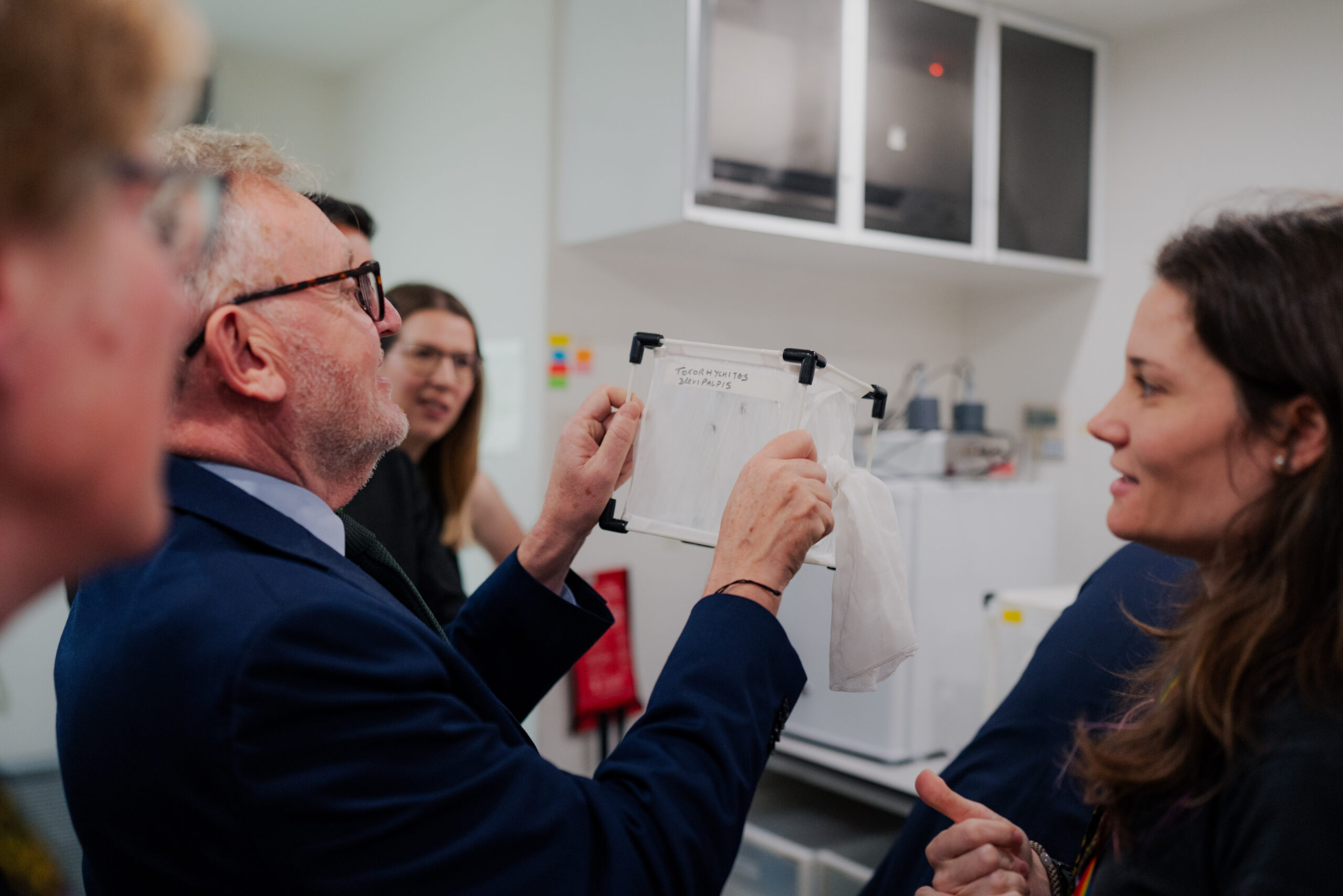
Photo credit: Robin Niedojadlo
During a tour of the Environmental Health Group’s laboratories, Dr Jackie Knee explained her cutting-edge research into the links between communicable diseases and malnutrition in children. Parliamentarians saw how blood and stool samples are analysed in LSHTM’s on-site laboratories. The school’s research addresses a major health burden; diarrhoeal disease, caused by pathogens such as E. coli and rotavirus, claims 1.1 million lives each year, including 317,000 children under five. These infections increase the risk of malnutrition, particularly in children, while repeated infections are linked to poor growth. Malnutrition also increases the danger posed by diarrhoeal disease as acutely malnourished children are 3 to 13 times more likely to die of diarrhoea than healthy children.
The group heard about four current Environmental Health Group studies in Mozambique, South Sudan, Senegal, and Kenya. These studies examine how environmental factors and water, sanitation, and hygiene (WASH) conditions relate to pathogen infection, with the aim of helping to reduce high mortality rates.
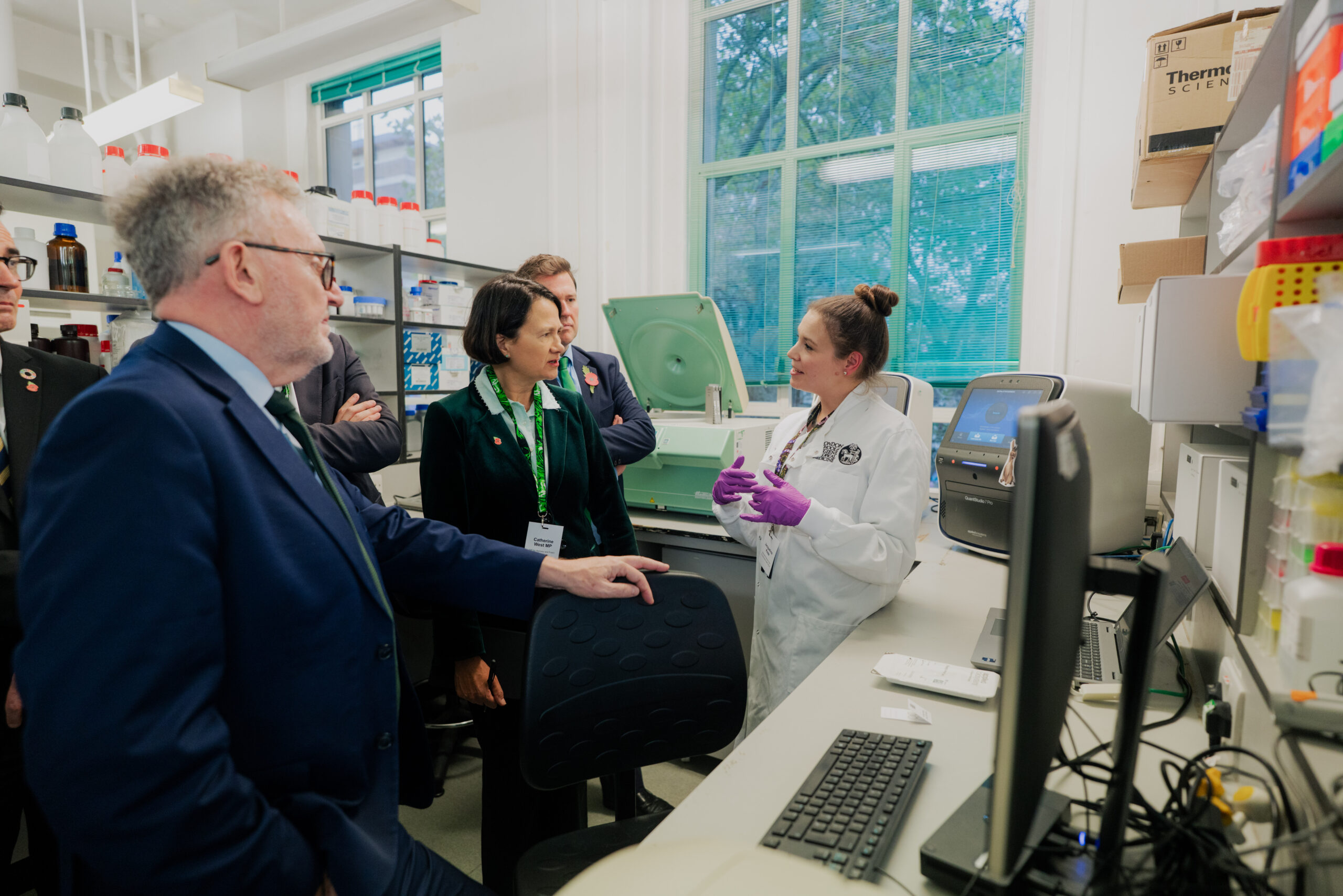
Photo credit: Robin Niedojadlo
The visit highlighted the importance of science diplomacy as a lever of soft power worldwide, particularly in food systems and nutrition, and the role that strong and equitable global partnerships can play in promoting effective policy change.
We are so grateful to all the parliamentarians who joined us, and to the academics who gave up their time to speak to us about their work in what was a thought-provoking and insightful visit.