
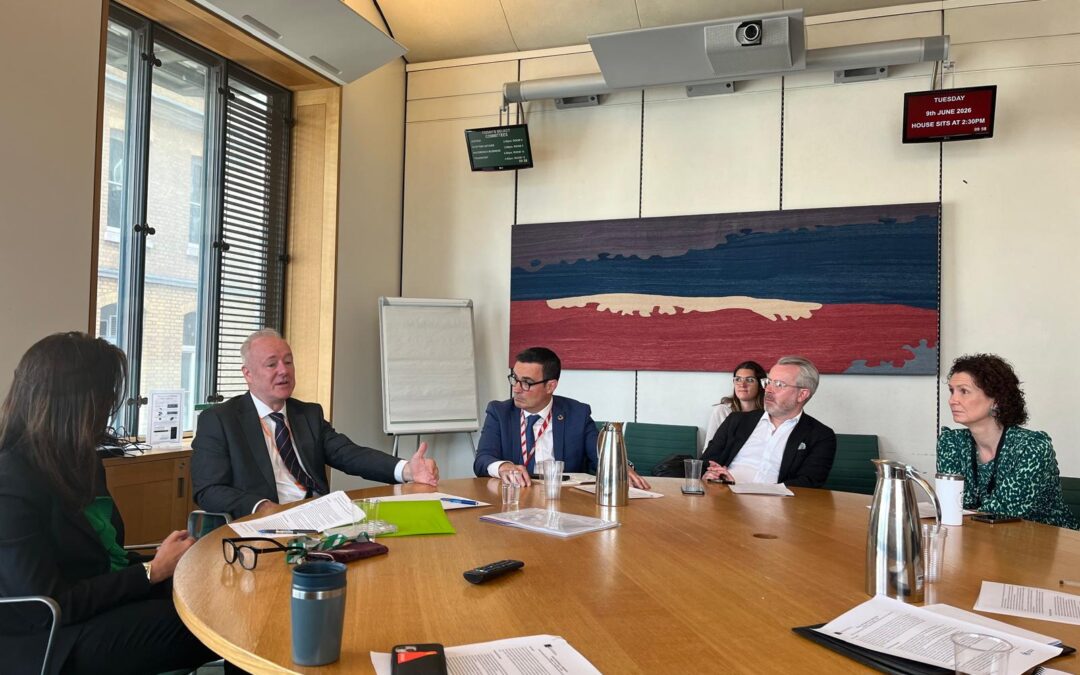
On Tuesday 9th June, Members of the APPG Nutrition for Development, including Vice-Chair, Monica Harding MP, and Members, Lord Purvis and Wendy Chamberlain MP as well as Lord Oates, met with John Aylieff, the World Food Programme (WFP)’s Country Director for Afghanistan, who shared a sobering image of a nation facing severe hunger and malnutrition, with women and children most severely affected.
Mr Aylieff relayed how 13.8 million Afghans—nearly one in three—are facing crisis or emergency levels of hunger. In 2026, malnutrition is projected to hit record levels: 3.7 million children under five and 1.2 million pregnant and breastfeeding women suffering acute malnutrition.
Despite the urgency of the situation, WFP stated it was only able to reach a fraction of those in greatest need. Of the 2.9 million people facing emergency hunger, many receive only half rations for limited periods.
Parliamentarians were told of the compounding of the crisis at hand, with returnees from Iran and Pakistan—2.5 million people in 2025, with another 2 million anticipated this year—straining already fragile host communities. Border closures, regional conflict and the Closure of the Strait of Hormuz have also significantly disrupted supply chains, leaving humanitarian actors in the region facing a full pipeline break for nutrition commodities that has lasted through the end of June.
WFP reached 6.7 million people with emergency food or cash assistance in 2025. Nutrition programmes supported 1.2 million children and 674,000 pregnant and breastfeeding women. Resilience initiatives helped over 54,000 households build climate-adaptive community assets. Yet the gap between what is needed and what is funded is vast, with WFP Afghanistan estimating that it requires $514 million from June to year-end and is currently only 8% funded against total needs of $977 million.
In 2024, WFP received £48 million from the UK for Afghanistan. In 2025, that figure dropped to £25 million—nearly half—even as needs surged, reflecting a broader pattern on ODA reductions, including fall in bilateral aid and nutrition spending, which was cut by 60% in 2021. Further reductions announced in early 2025 will see ODA fall to 0.3% by 2027.